Butterfly Motif Embroidery Border Review
As an embroidery designer who has spent years digitizing and stitching for small businesses, I know that choosing the right machine embroidery design is about more than just aesthetics. It is a strategic business decision. When a client approaches me with a request for branded merchandise, whether it is for a local bakery, a boutique florist, or a creative studio, the design must bridge the gap between artistic charm and commercial durability. Recently, I evaluated the Butterfly Motif Embroidery Border to determine its viability for professional applications. This review breaks down how this specific Borders category asset performs when translated from a digital file to a tangible brand asset.
First Impressions: Visual Personality and Brand Fit
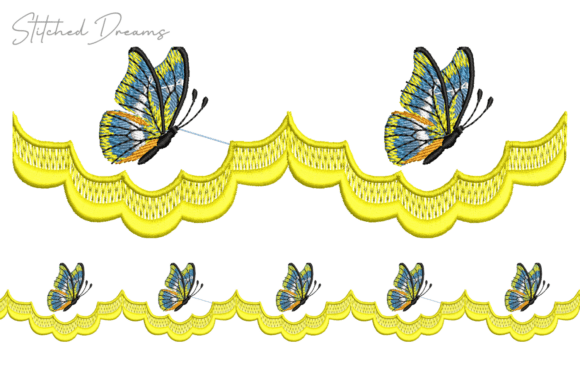
Upon loading the digital embroidery file into my editing software, the immediate impression of the Butterfly Motif Embroidery Border is one of delicate elegance mixed with a handmade warmth. The description promises "intricate butterflies and ornamental motifs," and visually, it delivers a sense of movement and grace. For brands in the lifestyle, wellness, or artisanal food sectors, this design feels inherently friendly and inviting. It lacks the harsh, industrial edges of corporate logos, making it perfect for businesses that want to project approachability.
However, "delicate" can be a double-edged sword in commercial Embroidery. While the ornamental nature suggests a premium, high-end feel suitable for boutique packaging or limited-edition apparel, it requires careful consideration regarding scale. The intricate details suggest a design that shines on larger canvases like tote bags or aprons but might lose definition if shrunk too aggressively for a small chest logo. The visual personality is distinctly feminine and organic, making it an excellent choice for spring collections, garden centers, or pet brands focusing on gentle care.
Real-World Business Applications
The true test of any design asset is its versatility in real-world scenarios. I envision the Butterfly Motif Embroidery Border serving several critical functions for small business owners:
- Staff Uniforms and Aprons: For a café or flower shop, placing this border along the hem of a linen apron adds a touch of sophistication that elevates the staff's appearance from standard service wear to curated brand ambassadors.
- Custom Apparel: Running this design as a sleeve detail on denim jackets or cardigans sold in a boutique creates a unique selling point that mass-produced clothing cannot replicate.
- Tote Bag Design: This is perhaps the strongest use case. A canvas tote featuring this border near the top or bottom edge transforms a simple bag into a walking advertisement that customers actually want to carry.
- Embellished Patches: Creating an embroidered patch with this motif allows for flexible branding. These can be sewn onto hats, backpacks, or even included as a free gift with purchase to enhance customer loyalty.
- Event Merch: For workshops or pop-up markets, this border works beautifully on commemorative items, providing a cohesive look that ties the event together visually.
In each of these contexts, the design acts as a frame or an accent rather than a dominant central logo, which allows it to complement existing brand marks without competing with them.
Critical Considerations for Production
While the aesthetic appeal is high, a professional reviewer must address the technical limitations. The Butterfly Motif Embroidery Border features intricate details that demand respect during the production phase. Here is where caution is required:
- Stitch Density and Fabric Texture: High detail often correlates with higher stitch density. On textured fabrics like heavy canvas or pique polo shirts, fine lines can get lost or cause puckering. It is crucial to test the design on the exact fabric intended for the finished product.
- Small Patch Sizes: If you intend to use this for a small embroidered patch under 2 inches, the "intricate butterflies" may merge into a solid blob of thread. Simplification or resizing limits must be checked against the specific hoop size capabilities of your machine.
- Curved Surfaces: Applying a linear border to a curved surface, such as the front of a cap, requires advanced hooping techniques. Without proper stabilization, the border may warp, breaking the visual continuity of the ornamental motifs.
- Thread Color Contrast: On dark uniforms, the delicate lines need high-contrast thread colors to remain visible. A low-contrast choice here could render the expensive embroidery invisible from a distance.
Furthermore, items subject to frequent washing, such as staff t-shirts or kitchen aprons, require robust backing. The stabilizer choice is non-negotiable; a cut-away stabilizer is likely necessary to prevent the intricate motifs from distorting after multiple wash cycles.
Impact on Brand Identity and Customer Trust
In the crowded marketplace of small business merch, consistency is key to building trust. Using a cohesive design element like the Butterfly Motif Embroidery Border across various touchpoints—from the employee's apron to the packaging ribbon—creates a unified brand identity. It signals to the customer that attention to detail matters. When a customer receives a product with high-quality, thoughtful embroidery, it increases the perceived value of the item and, by extension, the brand itself.
This design specifically enhances the "handmade" narrative. In an era of fast fashion and automated printing, physical thread texture offers a tactile experience that digital prints cannot match. It tells a story of craftsmanship, which resonates deeply with buyers of artisanal goods. However, if the execution is poor due to ignored technical constraints, it can have the opposite effect, making the brand appear amateurish. Therefore, the professionalism of the final output relies entirely on the preparatory work done by the decorator.
Practical Designer Notes for Implementation
Before committing to a large production run of commercial embroidery projects using this file, I recommend the following workflow to ensure success:
- Test in Black and White: Remove color variables initially to check if the contrast and definition hold up purely on form and stitch structure.
- Verify Commercial Licensing: Always confirm the license terms of the digital embroidery file. Ensure it covers unlimited production for resale if you are creating merchandise for clients.
- Create a Printable Mockup: Before stitching a single thread, generate a printable mockup to show the client how the border interacts with their specific garment cut and color.
- Check Thread Colors: Map the design to your specific thread chart (e.g., Madeira or Isacord) to ensure the gradient or color transitions in the butterflies translate well physically.
- Inspect Spacing: Look closely at the spacing between the ornamental motifs. If they are too close, they may cause thread buildup; if too far, the border may look disconnected.
- Compare Design Assets: Place this border beside your client's primary logo to ensure visual harmony. It should support the main brand mark, not overpower it.
Since the product description does not specify exact stitch counts, file formats, or recommended hoop dimensions, it is imperative to inspect the downloaded files immediately upon purchase. Do not assume compatibility with your specific machine setup. By treating the Butterfly Motif Embroidery Border as a serious component of your design assets library and respecting its technical requirements, you can leverage its beauty to create stunning, profitable merchandise that strengthens your brand's presence in the market.